.png)

Updated March 25, 2026
Most holistic wellness coaches lose clients not because their program is weak, but because the experience of accessing it is fragmented. Your guided meditations live in one platform, your nutrition PDFs in another, and your community is buried inside a Facebook group your clients barely open. The result is high churn, low completion, and revenue that spikes at launch but stalls soon after.
You no longer need a $100,000 custom development project to fix this. With modern wellness coach app software, you can launch a branded iOS and Android app in 4 to 8 weeks, consolidating your content, community, and payments into one place your clients actually return to.
Why holistic wellness coaches are moving off rented land
Your Instagram following, your Facebook group, your course listings on a generic platform - none of those are yours. Each sits on infrastructure someone else controls, and a single policy change can cut off the audience you've spent years building. YouTube's "Adpocalypse" demonstrated exactly this: David Pakman reported a 99% drop in ad revenue, H3h3Productions was earning just 15% of its typical revenue, and Phil DeFranco saw a 30% decline within the first month, with the impact varying significantly by channel type and content category. When your business depends on someone else's platform, that is not a hypothetical risk, it is an operational one.
A branded mobile app gives you a direct line to every client on their phone, independent of any algorithm. When you control the app, you control the push notification, the content feed, the community, and the checkout. That shift from rented land to owned infrastructure can be a critical operational move for wellness coaches building businesses that compound over time.
Custom development vs. wellness app builders: what is the true cost?
Custom mobile app development typically costs between $100,000 and $600,000, with most three-month MVPs starting closer to $150,000 once discovery and support are factored in. The timeline matches the cost: most custom projects run 3 to 9 months before a client can download anything.
No-code wellness app builders invert that math entirely. Passion.io plans start at $99/month on annual billing (Launch plan), with Scale at $239/month and Expand at $599/month annually. Passion.io targets a 4 to 8 week launch path, and independent reviewers at BloggingLift confirm that timeline is realistic for coaches with content ready.
Beyond the build cost, you also need to account for "app plumbing" - the backend infrastructure that keeps your app running: cloud hosting, automatic OS compatibility updates, security maintenance, and app store submissions. Passion.io handles all of this, as detailed on their features page. On Expand and Plus plans, submission support is included, meaning Passion.io's team guides you through Apple and Google review. You also pay Apple $99 per year for the Developer Programand Google a $25 one-time fee - register both in Week 1, since Apple approval typically takes a few hours to 48 hours (1-5 business days for organizations), and Google Play up to 48 hours.
5 essential features to look for in a wellness coach app platform
Not every app builder is built for holistic wellness coaching. Multi-modality content, daily habit loops, and community accountability often require specialized features that many generic course platforms or web-first marketing suites may not deliver.
Mobile-first engagement and push notifications
Email open rates for wellness content average 33 to 37%, and social reach is entirely dependent on an algorithm you cannot control. Push notifications deliver substantially higher long-term retention than email or social media alone. Apps that incorporate regular push notifications see users stay engaged for months longer, while apps that rely solely on passive discovery struggle to retain users beyond the first few weeks.
For a wellness coach running a daily mindfulness series or a 12-week nutrition program, this matters. Push notifications act as a habit loop - a timely tap that brings a client back at the exact moment motivation dips. Passion.io's app monetization features include push notification scheduling so you can align nudges with program milestones such as a Day 14 check-in or a weekly challenge reminder.
Multi-modality content delivery and offline access
Holistic wellness programs are not single-format. A somatic practitioner uses guided audio. A nutrition coach delivers PDF meal plans and video cooking walkthroughs. A life coach runs workshop replays alongside downloadable workbooks. Your platform needs to handle all of these natively.
Passion.io's course builder supports video, audio, PDFs, text, quizzes, and timers through a drag-and-drop interface. Offline access is also built in: clients can download lessons to their device for use without Wi-Fi. For a client doing morning breathwork in a basement gym or streaming yoga on a flight, offline mode is the difference between a completed session and a dropped one.
Integrated community and habit-tracking challenges
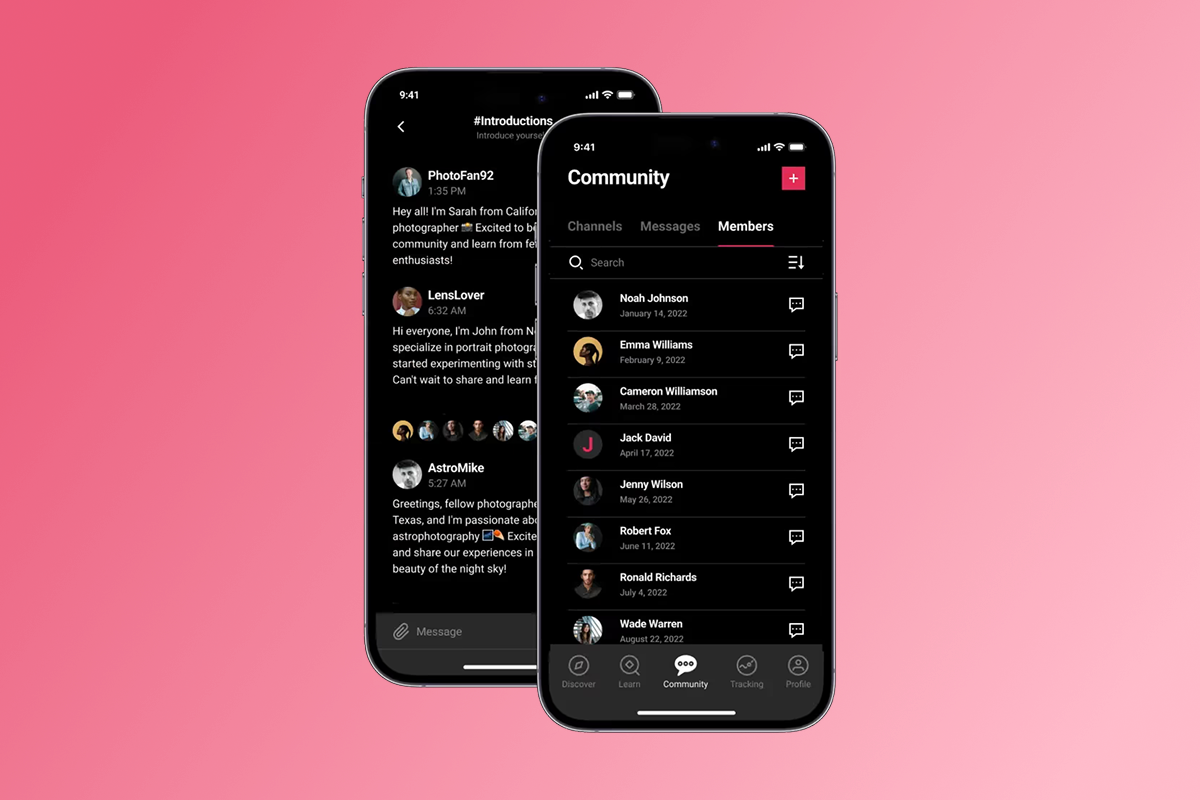
Moving your community from a Facebook group into your branded app can help reduce churn. When clients access lessons and community in the same place, switching elsewhere becomes less convenient. You can build community engagement directly inside your app using channels - for example "Weekly Wins," "Accountability Pairs," or "Nutrition Q&A" - and members interact without ever leaving your branded environment.
Challenges add a gamification layer that is particularly effective for wellness habits. Passion.io's goal tracking feature lets clients mark progress, track streaks, and earn completion certificates, mirroring the motivation mechanics that make habit apps sticky. You can also issue certificates for course completion to mark milestones clients actually want to share.
Flexible monetization and recurring revenue models
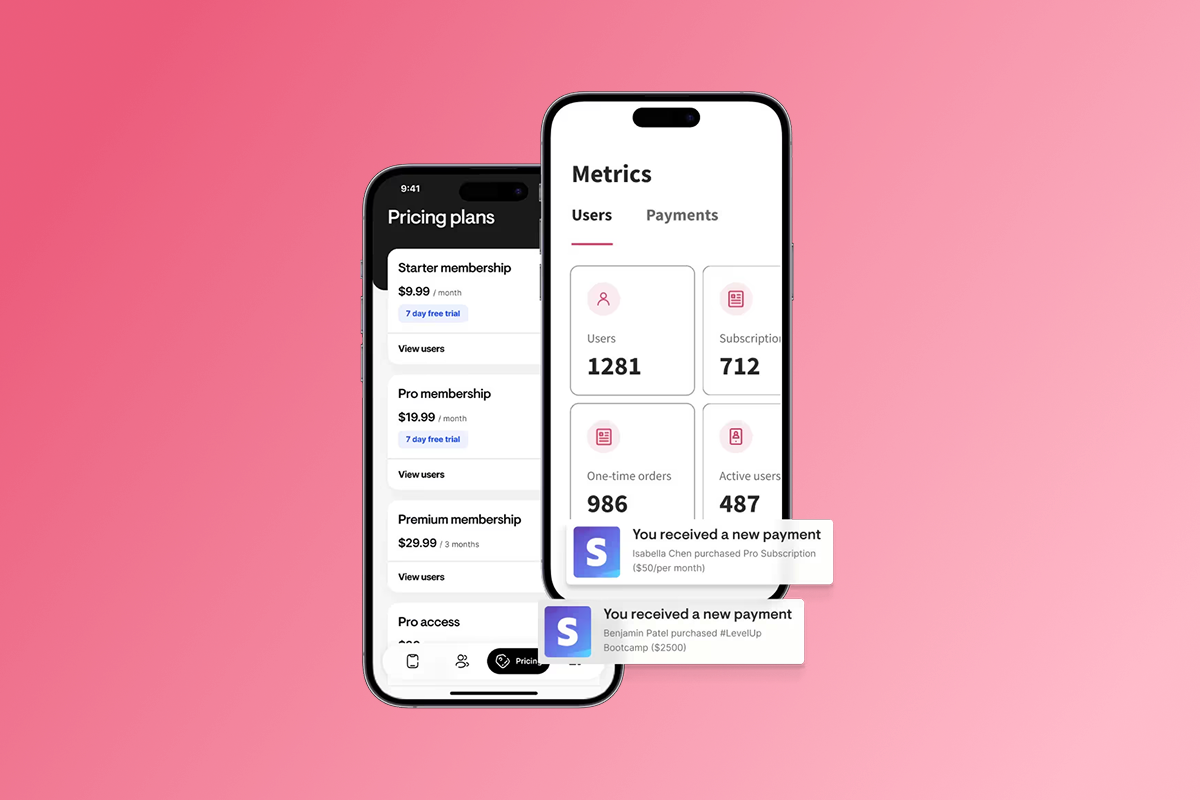
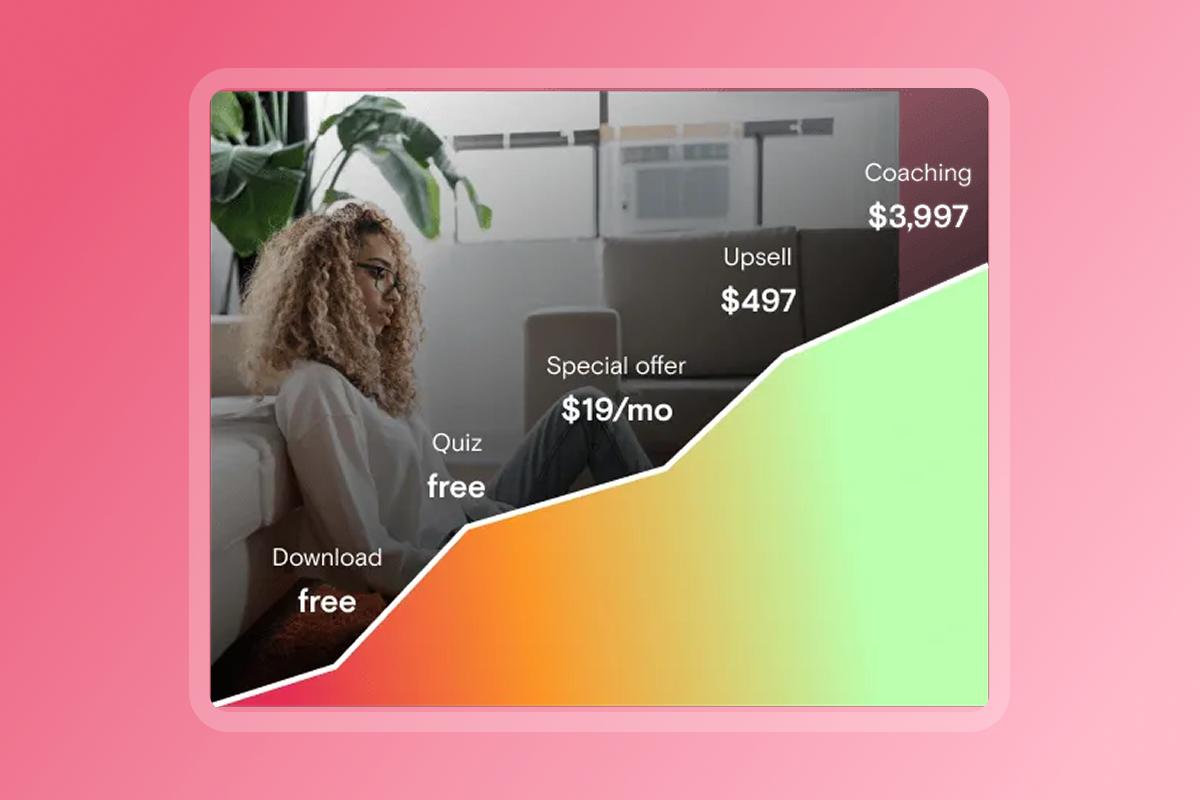
A sustainable wellness business runs on recurring revenue, not launch spikes. The monetization options on Passion.io cover subscriptions (weekly, monthly, or annual), one-time purchases, freemium access, and bundled offers. The fee path you choose changes your margin significantly.
Think of IAP as a toll road - fast and convenient for clients, but it costs more per sale. Route core subscriptions and high-ticket bundles through web checkout for better margins, and offer IAP as a convenience option for clients who prefer to pay through their phone's native payment system.
Reliable app plumbing and store submission support
App store approvals are not instant. Apple's review process typically takes 1 to 3 days for standard submissions, but rejections for metadata, screenshots, or compliance issues can add 1 to 2 weeks. Google Play has its own requirements for health and fitness apps - Passion.io's documentation on Google's Health and Fitness declaration walks you through the compliance steps specific to wellness content.
Expand and Plus plans include submission support from Passion.io's team. On Launch or Scale, plan a DIY timeline with a 2-week buffer built in and prepare your metadata before you submit using Passion.io's program launch tips.
Top wellness coach app software platforms compared
The market for wellness app builders breaks into three broad categories: native mobile-first builders, web-first marketing suites with mobile add-ons, and video streaming platforms. Here is how the leading options compare on the criteria that matter most for holistic coaching programs.
Passion.io: the best holistic wellness app builder for mobile engagement
Passion.io is purpose-built for creators who need a real branded app on a client's home screen, not just a mobile-responsive website. The drag-and-drop builder supports every content type holistic coaches use, and native push notifications, offline mode, and in-app community are core features rather than add-ons.
Every Passion.io plan includes access to Passion Academy training, covering how to structure your offer, launch it, and convert subscribers. Passion.io backs purchases with a 30-day money-back guarantee, with no free trial available. The case studies page documents creators reaching six-figure revenue months and mid-five-figure MRR across fitness, arts, and coaching niches. According to BloggingLift's 2025 review, over 15,000 apps have been launched on the platform with more than 2 million paying end users - treat these as directional figures rather than official company statistics.
"I have really enjoyed creating my passion app over the past year and half. I would not have been able to make my idea for an app come to life without the platform passion provides. The passion support team has also been extremely helpful." - FitWithBrit on Trustpilot
"I am excited for being give a cost-effective way to create an app so Shift Your Life® teachings can reach more people to have the personal (body, mind, emotion, spirit) or entrepreneurial business transformation they desire." - Tracy Latz on Trustpilot
Kajabi: the web-first marketing alternative
Kajabi is a strong choice if your primary need is a polished website, email automations, and sales funnels. However, clients access your content through the shared "Kajabi" app rather than a branded app carrying your name and logo. The mobile add-on costs an extra $199/month on top of the base $143/month plan. For daily habit formation driven by push notifications and a branded app icon on a client's home screen, Kajabi is not the right tool.
Uscreen: the video-centric platform
Uscreen is built for high-production video memberships delivered across OTT platforms like Roku, Apple TV, and Amazon Fire TV. For holistic wellness coaches who rely on multi-format content - audio meditations, downloadable PDFs, quizzes - alongside community and coaching tools, Uscreen's video-centric focus may not provide the specialized habit-tracking and multi-modality features typically needed for this format. Pricing adds $1.99 per paid member on top of the $149/month platform fee, which compounds quickly as you scale.
How to launch your branded mindfulness coach app in 30 days
This timeline assumes at least 10 core lessons are ready. "Done" is defined at each step so you know when to move forward.
- Week 1 - Set up accounts and migrate core content.**Register your Apple Developer account ($99/year) and Google Play Developer account ($25 one-time) on Day 1, since processing takes 1 to 2 business days. Upload 10 to 15 core lessons into the Passion.io builder, organizing them into sections with progress tracking enabled. By Day 7, your content structure should be complete and developer accounts confirmed.
- Week 2 - Brand the app and set pricing.**Apply your logo, brand colors, and fonts. Write your app store listing description and prepare screenshots - these often trigger rejection delays when rushed. Set your pricing tiers: a monthly subscription, an annual option, and optionally a freemium entry tier. Publish your web app by Day 14, which goes live almost immediately and lets you start onboarding clients before native app approval.
- Week 3 - Submit to app stores and run a beta.**Invite 5 to 10 beta testers to use the web app and surface onboarding friction. Submit your iOS and Android apps for review simultaneously. For health and fitness apps on Google Play, follow the Google Health and Fitness declaration before submitting to avoid rejection delays.
- Week 4 - Onboard your first 50 users via web app.**While app store reviews proceed (plan 1 to 2 weeks for buffer), run your launch through the web app. Send push notifications on Day 28 and Day 30 to drive early lesson completions, and watch for onboarding friction patterns in your analytics before your native apps go live.
Measuring success: analytics and retention metrics that matter
Track these metrics from Day 1 and set targets before you launch so you have a clear benchmark for Month 3.
- Course completion rate: Push notifications and in-app challenges are the primary drivers of completion improvements. Track completion rate from Day 1 to measure the impact of these features within your first 90 days.
- DAU/MAU ratio (Daily/Monthly Active Users): A healthy wellness app targets 20 to 30%, measuring whether clients form daily habits or only log in occasionally.
- Monthly churn rate: For subscription apps, monthly churn rates vary widely during early months as you optimize onboarding. Target keeping monthly churn below 6% as you refine your engagement approach.
- Drop-off checkpoints: Use Passion.io's goal tracking to identify where clients disengage, then trigger automated push check-ins at those exact points.
If churn exceeds 6% monthly after Month 2, add a 30-day in-app challenge, increase your push cadence to two nudges per week, and audit your onboarding for friction in the first three sessions.
"The 30-day challenge guides me through each step, and the more I explore, the more I see my future app taking shape. Passion.io offers tools that spark my creativity." - Thea White on Trustpilot
Ready to build a wellness app your clients open daily? Try Passion.io with a 30-day money-back guarantee. See how coaches in fitness, mindfulness, and nutrition launch in 4 to 8 weeks
Frequently asked questions
How long does it take to build a wellness coach app?
Your web app can be live in 2 to 4 weeks with content ready, and your iOS/Android apps can be in stores within 4 to 8 weeks depending on app store review timelines. Build in a 1 to 2 week buffer for review feedback and resubmissions.
What are the real costs of app builders for wellness coaches?
Passion.io plans start at $99/month on annual billing, plus Apple's $99/year developer fee and Google's $25 one-time fee. Web checkouts via PassionPayments carry a 3.9% platform fee plus Stripe's standard processing, while in-app purchases carry a 15 to 30% fee retained by Apple or Google.
Can clients access my meditations and workouts offline?
Yes. Passion.io's native iOS and Android apps allow clients to download audio and video lessons for offline use, so a guided meditation or workout is accessible without a Wi-Fi connection.
Can I deliver video, audio, PDFs, and quizzes all in one app?
Yes. The drag-and-drop course builder supports video, audio, PDFs, text, quizzes, and timers natively, and all content types display correctly inside the branded iOS, Android, and web app.
Key terminology
App plumbing: The backend infrastructure that keeps your app running after launch, including cloud hosting, automatic OS compatibility updates, security patches, and app store submission management. Passion.io handles this so you focus on content and coaching rather than server maintenance.
In-App Purchases (IAP): Transactions processed directly through Apple or Google's native payment systems inside your app. Apple and Google typically retain 15 to 30% of each transaction, making IAP a convenience option best suited to lower-priced upsells rather than core subscription revenue.
Tool sprawl: The operational drag caused by running a single business across multiple disconnected platforms for courses, community, payments, and scheduling. It increases support load, reduces client engagement, and makes consistent branding nearly impossible.
PassionPayments: Passion.io's integrated web checkout system, powered by Stripe, which charges a 3.9% platform fee on top of Stripe's standard processing rates. It is the lower-fee option compared to Apple or Google IAP for most subscription and bundle price points.